A standard weekly clean hits the surface. It gets the visible dirt, wipes the counters, and runs the vacuum. But the grime behind appliances, inside vents, and under furniture keeps building until your home never quite feels fresh — no matter how often you clean it.
A deep clean is different. It targets the areas your regular routine skips entirely. This checklist breaks down every task, every room, and how often each job actually needs to happen.
Key Takeaways
- Deep cleaning is not the same as regular cleaning. It targets hidden buildup in areas skipped during routine maintenance.
- Most homes need a full deep clean two to four times per year. High-traffic areas may need attention more often.
- Kitchen and bathroom deep cleans take the longest. Budget 1.5 to 3 hours per room depending on size and buildup.
- The right order matters. Work top-to-bottom and room-to-room to avoid recontaminating clean surfaces.
- Some tasks only happen once or twice a year. A written checklist prevents them from being skipped indefinitely.
- You do not need specialty products for most deep cleaning tasks. White vinegar, baking soda, and a good degreaser handle the majority of jobs.
What Is the Difference Between Deep Cleaning and Regular Cleaning?
Quick Answer: Regular cleaning maintains visible surfaces on a weekly basis. Deep cleaning goes further — inside appliances, behind furniture, under sinks, and inside vents. It removes buildup that routine cleaning never reaches and typically happens two to four times per year.
Think of regular cleaning like making the bed every morning. Deep cleaning is washing the mattress cover, rotating the mattress, and vacuuming the box spring. Both are necessary. They just serve different purposes.
Regular cleaning tasks include wiping counters, mopping floors, cleaning toilets, and vacuuming carpets. Deep cleaning adds tasks like descaling the showerhead, cleaning inside the oven, washing the refrigerator coils, and scrubbing grout lines.
How Do You Know When a Deep Clean Is Overdue?
A few clear signs tell you a deep clean is needed. Musty smells that don’t go away with regular cleaning usually point to hidden mold or trapped moisture. Appliances running less efficiently — like a fridge that runs louder than usual — often means dust buildup on the coils. Grout that’s darker than it used to be, sticky cabinet doors, and dusty vents are all signs your home needs more than a surface wipe.
What Should a Complete Home Deep Cleaning Checklist Include?
Quick Answer: A complete home deep cleaning checklist covers every room with tasks organized by area: surfaces, appliances, fixtures, floors, and hidden zones. It also includes a frequency schedule so you know how often each task needs to happen throughout the year.
The most common mistake is treating deep cleaning like an extended version of regular cleaning. Real deep cleaning has its own task list. It focuses on the areas that accumulate buildup slowly and invisibly over weeks and months.
The sections below break down each room with a specific task list and a frequency guide so you know what to tackle and when.
What Does a Kitchen Deep Clean Cover?

Quick Answer: A kitchen deep clean covers the inside of the oven, refrigerator coils, range hood filters, cabinet interiors, the dishwasher drain, backsplash grout, and under and behind all major appliances. Budget 2 to 3 hours for a standard kitchen.
Appliance Deep Cleaning Tasks
- Clean inside the oven with oven cleaner or a baking soda paste — let it sit for at least 30 minutes before scrubbing
- Remove refrigerator shelves and drawers and wash them with warm soapy water
- Vacuum refrigerator coils (located at the back or underneath) to improve efficiency and reduce energy use
- Run the dishwasher with a dishwasher cleaner tablet or a cup of white vinegar on the bottom rack
- Clean the dishwasher filter — remove it, rinse under running water, and scrub with a soft brush
- Degrease the range hood filters by soaking them in hot water with dish soap for 20 minutes
- Wipe down the microwave interior with a steam method — heat a bowl of water and vinegar for 5 minutes, then wipe
Surfaces, Cabinets, and Hidden Zones
- Wipe cabinet interiors and replace shelf liners if they have absorbed grease or odors
- Degrease cabinet doors, especially around handles where buildup collects fastest
- Scrub backsplash tile and grout with a stiff-bristle brush and a grout cleaner
- Pull the refrigerator and stove away from the wall and clean the floor and walls behind them
- Wipe baseboards and the wall behind the trash can
- Clean the garbage disposal by grinding ice cubes and salt, then rinsing with citrus halves
Kitchen Deep Clean Frequency Guide
| Task | Frequency | Time Required |
|---|---|---|
| Clean inside oven | Every 3 months | 45 to 60 minutes |
| Vacuum refrigerator coils | Every 6 months | 15 minutes |
| Clean dishwasher filter | Every 1 to 2 months | 10 minutes |
| Degrease range hood filters | Every 1 to 3 months | 20 minutes |
| Pull appliances and clean behind | Every 6 months | 30 minutes |
| Scrub backsplash grout | Every 3 to 6 months | 20 to 40 minutes |
| Clean cabinet interiors | Once per year | 30 to 60 minutes |
What Does a Bathroom Deep Clean Cover?

Quick Answer: A bathroom deep clean targets the toilet base and behind the toilet, grout lines, the showerhead, caulk seams, exhaust fan, cabinet interiors, and the floor around and behind the toilet. It typically takes 1 to 2 hours per bathroom.
Shower and Tub Deep Cleaning Tasks
- Remove and soak the showerhead in white vinegar for 30 to 60 minutes to remove mineral deposits
- Scrub grout lines with a stiff brush and a grout cleaner or baking soda paste
- Inspect and replace moldy or cracked caulk along the tub edge and shower corners
- Clean the shower door tracks with a toothbrush and vinegar solution
- Wash the shower curtain and liner in the washing machine on a gentle cycle
- Scrub the tub with a non-abrasive cleaner and let it sit for 10 minutes before rinsing
Toilet, Vanity, and Ventilation Tasks
- Clean under the toilet rim with a toilet brush and let cleaner sit for 10 minutes
- Wipe around the toilet base, behind the toilet, and along the floor where buildup accumulates
- Clean the bathroom exhaust fan cover — remove it, rinse it, and vacuum the fan blades
- Empty and wipe down the cabinet under the sink
- Scrub the sink drain with a brush and baking soda to clear buildup and odor
- Wipe light fixtures and replace any burned-out bulbs
Bathroom Deep Clean Frequency Guide
| Task | Frequency | Time Required |
|---|---|---|
| Descale showerhead | Every 3 months | 5 minutes active, 30 to 60 minutes soaking |
| Scrub grout lines | Every 2 to 3 months | 20 to 45 minutes |
| Replace or clean caulk | Every 1 to 2 years | 1 to 2 hours |
| Clean exhaust fan | Every 6 months | 15 to 20 minutes |
| Wash shower curtain and liner | Every 1 to 2 months | 5 minutes setup, machine cycle |
| Clean under-sink cabinet | Every 6 months | 15 minutes |
What Does a Bedroom Deep Clean Cover?
Quick Answer: A bedroom deep clean includes mattress vacuuming and rotating, washing all bedding including pillows and duvets, cleaning under the bed, wiping ceiling fan blades, vacuuming furniture upholstery, and wiping down vents and baseboards. Budget 60 to 90 minutes per bedroom.
Bedding and Mattress Deep Clean Tasks
- Strip the bed completely and wash sheets, pillowcases, duvet covers, and mattress protectors
- Wash pillows — most synthetic and down pillows are machine washable on a low heat cycle
- Vacuum the mattress surface using the upholstery attachment, paying extra attention to seams
- Deodorize the mattress by sprinkling baking soda, letting it sit for 30 minutes, then vacuuming it up
- Rotate the mattress 180 degrees — flip if the manufacturer recommends it
- Wash or dry-clean duvets and comforters according to the care label
Furniture, Floors, and Air Quality Tasks
- Move furniture away from the walls and vacuum underneath
- Vacuum upholstered headboards, chairs, and the sides and back of sofas
- Wipe ceiling fan blades with a damp cloth — a pillowcase pulled over each blade catches dust without spreading it
- Wipe all baseboards and the tops of door frames
- Clean air vents with a vacuum attachment and a damp cloth
- Wipe down light switches, outlet covers, and doorknobs
What Does a Living Room Deep Clean Cover?
Quick Answer: A living room deep clean targets upholstered furniture, carpet or rug deep cleaning, electronics and cables, curtains or blinds, baseboards, and the areas behind and under all furniture. Expect 1 to 2 hours depending on room size and furniture volume.
Upholstery and Soft Furnishing Tasks
- Remove sofa cushions and vacuum inside the cushion channels — this is where crumbs, coins, and allergens collect
- Spot-clean fabric upholstery with an upholstery cleaner appropriate for the fabric type
- Wash removable cushion covers if care labels allow
- Vacuum and rotate area rugs — take them outside and beat them if possible
- Vacuum curtains using the upholstery attachment or take them down for machine washing if labeled washable
- Wipe blinds slat by slat with a damp microfiber cloth
Electronics, Shelving, and Hard-to-Reach Areas
- Dust the TV screen with a dry microfiber cloth — never spray liquid directly onto the screen
- Wipe cables, power strips, and entertainment units where dust builds in layers
- Empty and wipe bookshelves — dust each book or decoration individually
- Wipe down window sills and the window tracks with a toothbrush and damp cloth
- Clean behind the TV stand and any large furniture pushed against the wall
What Does a Laundry Room and Utility Area Deep Clean Cover?
Quick Answer: A laundry room deep clean includes cleaning the washing machine drum and seal, clearing the dryer vent line, wiping cabinet interiors, and cleaning the lint trap housing. The dryer vent is a fire safety task and should be cleared at least once per year.
Washer and Dryer Deep Clean Tasks
- Run the washing machine empty on the hottest cycle with two cups of white vinegar to remove detergent residue and odor
- Wipe the rubber door seal on front-load washers — mold accumulates in the folds and cannot be reached by a regular wash cycle
- Clean the detergent drawer by removing it completely and soaking it in hot water
- Clean the dryer lint trap housing — the screen catches most lint, but residue builds up in the slot itself. Use a long brush to reach inside.
- Disconnect the dryer and clear the vent duct from the dryer to the exterior wall — lint buildup in the vent duct is a leading cause of residential fires
- Wipe the exterior of both machines and clean underneath them
What Deep Cleaning Tasks Are Easy to Forget Throughout the House?
Quick Answer: The most overlooked deep cleaning tasks include light switches, door frames, ceiling fan blades, air vents, baseboards, the tops of cabinets, inside closets, window tracks, and the areas behind large furniture. These are rarely touched in regular cleaning but accumulate significant dust and grime.
Whole-Home Tasks That Span Every Room
| Task | Location | Frequency | Best Tool |
|---|---|---|---|
| Wipe light switches and outlet covers | Every room | Every 1 to 2 months | Damp microfiber cloth |
| Wipe ceiling fan blades | Every room with fans | Every 1 to 3 months | Pillowcase or extendable duster |
| Clean air vents and registers | Every room | Every 3 months | Vacuum with brush attachment |
| Wipe baseboards | Every room | Every 2 to 3 months | Damp cloth or flat duster |
| Clean door frames and tops of doors | Every room | Every 3 to 6 months | Damp cloth |
| Vacuum inside closets | All closets | Every 3 months | Vacuum with crevice tool |
| Clean window tracks | All windows | Every 6 months | Old toothbrush and vinegar solution |
| Wipe tops of cabinets and furniture | Kitchen, living areas | Every 3 months | Damp microfiber cloth |
What Is the Best Order to Deep Clean a House?
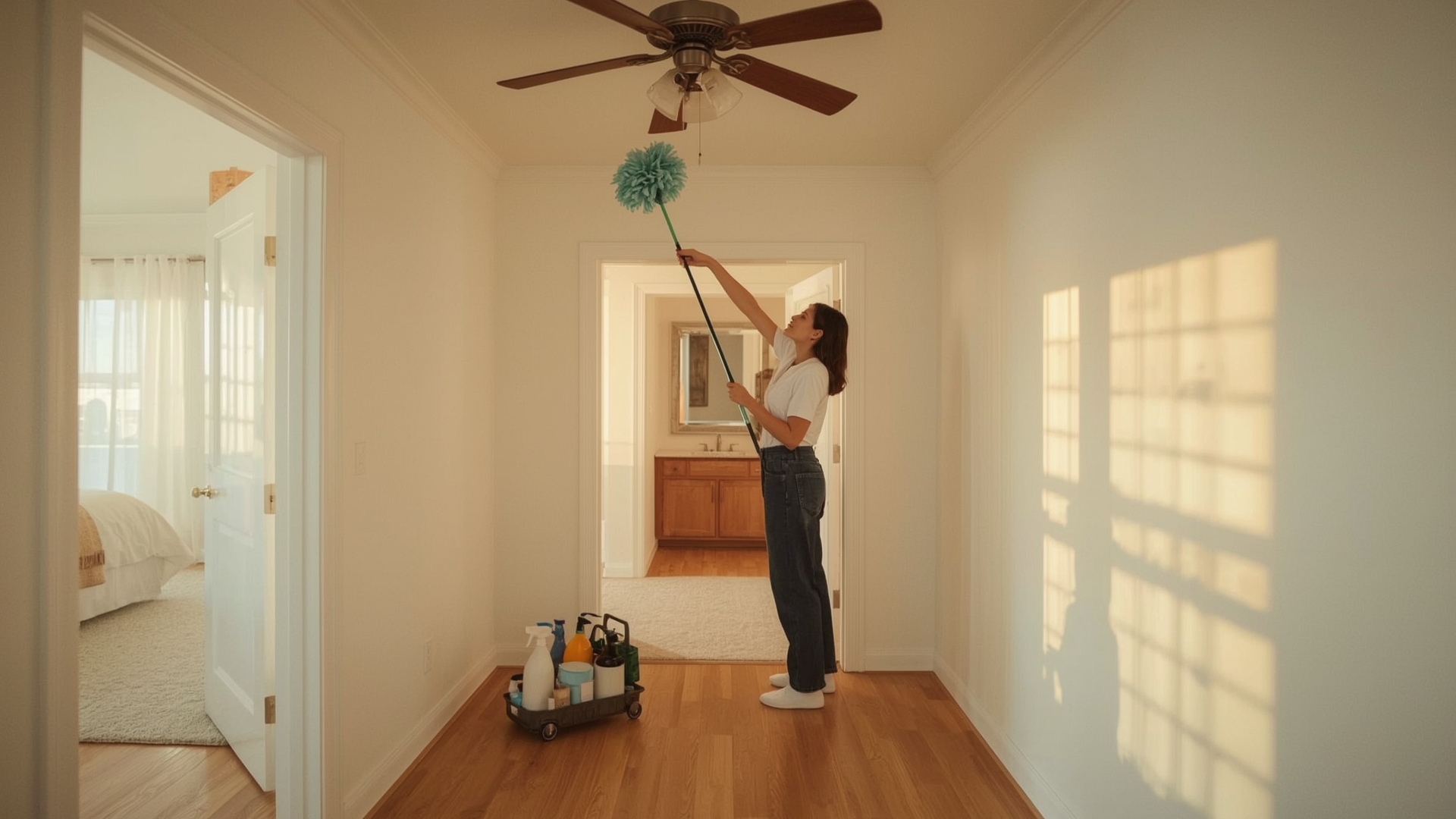
Quick Answer: Start at the top of each room and work down. Clean ceilings, fans, and high shelves first so fallen dust can be picked up when you vacuum and mop last. Work room by room. Save bathrooms and the kitchen for last since they require the most time and product dwell time.
The top-to-bottom rule prevents you from recontaminating surfaces you have already cleaned. If you mop the floor first and then wipe the shelves, dust and debris from the shelves fall right onto your clean floor.
A logical room order for a full-home deep clean is: bedrooms first (least mess), then living areas, laundry, bathroom, and kitchen last. This lets cleaning products sit and work in the kitchen and bathroom while you complete other rooms.
Deep Cleaning Day Workflow
- Start spray cleaners on the oven, toilet bowl cleaner in each bathroom, and dishwasher cleaner — let them dwell while you work other areas
- Work top-to-bottom in each room: ceiling fans, vents, shelves, furniture surfaces, then floors
- Strip and start washing bedding and laundry so the machines run while you clean
- Return to the kitchen and bathroom for scrubbing after dwell time
- Finish with floor vacuuming and mopping across all rooms
How Often Should You Deep Clean Different Areas of Your Home?
Quick Answer: Most rooms need a full deep clean every three to four months. High-use areas like kitchens and bathrooms benefit from light deep cleaning monthly. Annual deep cleaning tasks include dryer vents, refrigerator coils, and mattress washing. The exact schedule depends on household size and lifestyle factors.
Deep Cleaning Frequency by Area
| Area | Full Deep Clean Frequency | Key Annual Tasks |
|---|---|---|
| Kitchen | Every 3 months | Cabinet interiors, refrigerator coils |
| Bathrooms | Every 1 to 2 months | Caulk inspection, exhaust fan blades |
| Bedrooms | Every 3 to 4 months | Mattress cleaning, pillow washing |
| Living Room | Every 3 to 4 months | Upholstery cleaning, blind wiping |
| Laundry Room | Every 3 months | Dryer vent clearance, washer drum clean |
| Whole-Home Tasks | Every 1 to 6 months (varies) | Vents, baseboards, window tracks |
Factors That Change Your Deep Clean Schedule
Households with pets, young children, or allergy sufferers need more frequent deep cleaning. Pet dander and hair collect inside vents and on upholstery faster than most cleaning routines account for. Homes with central HVAC systems should also change air filters every 30 to 90 days — a clogged filter circulates dust rather than removing it.
What Supplies Do You Need for a Home Deep Clean?
Quick Answer: A complete home deep clean requires a degreaser, white vinegar, baking soda, a grout brush, an extendable duster, microfiber cloths, a vacuum with attachments, mop, and a dryer vent brush. Most tasks do not require specialty products, but a few tools make a major difference in results.
Deep Cleaning Supply List
| Supply | Primary Use | Approx. Cost |
|---|---|---|
| White distilled vinegar (1 gallon) | Descaling, deodorizing, surface cleaning | $3 to $5 |
| Baking soda (large box) | Mattress deodorizing, drain cleaning, scrubbing | $2 to $4 |
| Kitchen degreaser spray | Cabinet doors, range hood, oven surfaces | $5 to $10 |
| Grout brush or stiff-bristle brush | Tile grout, oven racks, drain scrubbing | $5 to $12 |
| Extendable microfiber duster | Ceiling fans, vents, tops of cabinets | $10 to $20 |
| Dryer vent brush kit | Lint trap housing, vent duct clearance | $12 to $25 |
| Vacuum with attachments | Upholstery, vents, baseboards, mattress | $80 to $300 |
Frequently Asked Questions About Home Deep Cleaning
How long does it take to deep clean an entire house?
A full deep clean of a standard three-bedroom home takes between six and twelve hours. The kitchen and bathrooms take the longest — each can run two to three hours depending on buildup. Splitting the deep clean across two days helps avoid fatigue and ensures you don’t rush through critical tasks.
Can I deep clean my home myself, or should I hire a professional?
Most deep cleaning tasks are manageable as DIY projects with the right supplies. Professional cleaning services make sense for specific jobs like steam cleaning carpets, clearing dryer vents in long duct runs, or post-renovation cleaning where dust and debris are heavy. For routine seasonal deep cleans, a systematic checklist gets consistent results at a much lower cost.
What is the difference between sanitizing and deep cleaning?
Deep cleaning removes physical buildup — grease, dust, soap scum, and grime. Sanitizing reduces the number of bacteria and pathogens on a surface using a disinfectant product. A surface has to be physically clean before sanitizing works properly. Deep cleaning comes first; sanitizing is the final step on high-touch surfaces like toilet handles, doorknobs, and counters.
How do I maintain results after a deep clean?
The easiest way to maintain deep cleaning results is to build small maintenance habits into your weekly routine. Wipe the stovetop after cooking. Rinse the shower after each use. Run the dishwasher cleaner tablet monthly. These small actions slow the buildup that makes your next deep clean harder. A shorter quarterly deep clean is much easier than catching up after a year of neglect.
What areas cause the most problems when skipped during deep cleaning?
The dryer vent duct is the highest-risk area — lint buildup there is a fire hazard. Refrigerator coils clogged with dust force the compressor to work harder, shortening the appliance’s lifespan and raising energy bills. Bathroom exhaust fans clogged with dust stop working efficiently, which leads to mold growth from trapped moisture. These three areas have real consequences when skipped.
Should you deep clean before or after decluttering?
Always declutter first. Cleaning around clutter is inefficient and leaves large areas untouched. When you clear surfaces and remove items that don’t belong in a space, every cleaning task becomes faster and more thorough. A good rule: before any deep cleaning session, spend 20 minutes removing anything that doesn’t belong in the room being cleaned.