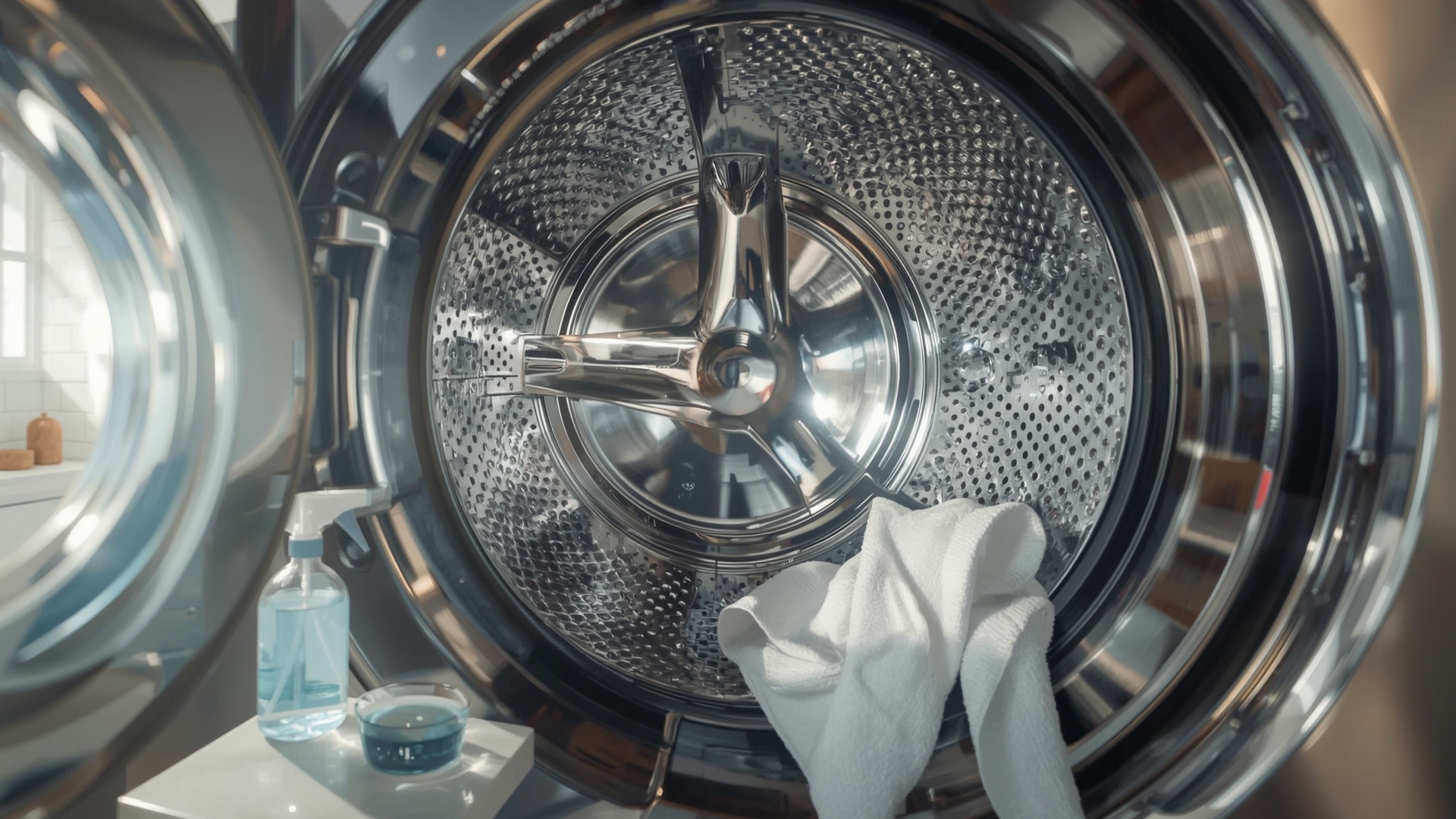
Your washing machine cleans your clothes, but who cleans the machine? Over time, soap scum, mineral deposits, mold, and bacteria build up inside the drum, detergent drawer, and rubber door seal. That buildup makes your machine less effective — and it can make your laundry smell worse after washing than it did before.
This guide covers everything: how to clean the drum, scrub the detergent drawer, tackle mold on the rubber seal, and set a maintenance schedule that keeps problems from coming back. It works for both front-load and top-load machines.
Key Takeaways
- Clean your washing machine drum once a month using a hot water cycle with white vinegar or a commercial washing machine cleaner tablet.
- The rubber door seal on front-loaders is the most common source of mold — wipe it dry after every wash and deep clean it monthly.
- The detergent drawer traps soap residue and mold — remove it completely and soak it in warm water every month.
- Top-load and front-load machines need different cleaning approaches — agitator access and seal design are the key differences.
- Leaving the door or lid open after a wash is the single most effective habit to prevent mold growth between cleanings.
- White vinegar and baking soda work well for light buildup, but commercial enzymatic or oxygen-bleach cleaners handle heavy mold and odor better.
Why Does the Inside of a Washing Machine Get Dirty?
Quick Answer: Soap scum, hard water minerals, lint, skin cells, and moisture combine inside the drum and seal after every wash cycle. This creates a warm, damp environment where mold and bacteria grow — causing musty odors and reducing cleaning performance.
Every laundry load leaves behind a small amount of residue. Detergent doesn’t always fully rinse away. Fabric softener coats the drum walls. Hard water leaves mineral deposits on every surface it touches.
Front-load machines are especially prone to mold because the rubber door gasket (the flexible seal around the door opening) traps moisture in its folds. Top-load machines have more airflow by design, but they still build up residue under the agitator and around the drum rim.
The result is a biofilm — a thin, sticky layer of bacteria and mold — that forms on inner surfaces. You can’t always see it, but you can smell it on your “clean” laundry.
What Supplies Do You Need to Clean a Washing Machine?
Quick Answer: You need white vinegar, baking soda, a microfiber cloth, an old toothbrush, and optionally a commercial washer cleaner tablet like Affresh. For mold on the rubber seal, diluted bleach (1 part bleach to 10 parts water) is the most effective option.
Cleaning Supplies Comparison
| Cleaner | Best Use | Effectiveness | Safe for Septic? | Cost (Approx.) |
|---|---|---|---|---|
| White Vinegar | Light mineral deposits, odor | Moderate | Yes | $0.10 per use |
| Baking Soda | Deodorizing, mild scrubbing | Mild | Yes | $0.05 per use |
| Affresh Tablet | Drum deep clean, soap scum | High | Yes | $1.50–$2.00 per tablet |
| OxiClean Washing Machine Cleaner | Drum odor, stains, bacteria | High | Yes | $1.00–$1.50 per use |
| Diluted Bleach (1:10) | Mold on rubber seal | Very High | No (in large amounts) | $0.05 per use |
| Liquid Chlorine Bleach (full strength) | Heavy drum mold or disinfection | Very High | No | $0.15 per use |
Never mix bleach and vinegar. They create chlorine gas, which is harmful to breathe. Use one or the other, and rinse the machine thoroughly between any product changes.
How Do You Clean the Washing Machine Drum?

Quick Answer: Run an empty hot water cycle with 2 cups of white vinegar or one Affresh tablet placed directly in the drum. Follow with a second cycle using half a cup of baking soda. This removes soap scum, odor, and mineral buildup without damaging the machine.
Cleaning the Drum on a Front-Load Machine
- Make sure the drum is completely empty.
- Pour 2 cups of white vinegar into the detergent dispenser, or place one commercial cleaner tablet directly in the drum.
- Select the hottest available wash cycle — “Sanitize,” “Tub Clean,” or “Hot” depending on your model.
- Let the full cycle run.
- After it finishes, sprinkle half a cup of baking soda into the drum.
- Run a second short hot cycle to rinse and deodorize.
- Wipe the inside of the drum with a dry microfiber cloth when the cycle ends.
Cleaning the Drum on a Top-Load Machine
- Set the machine to the largest load size and hottest water temperature.
- Start the cycle and let the drum fill with water.
- Pause the cycle and add 4 cups of white vinegar directly to the water.
- Let it soak for 30–60 minutes without draining.
- Resume the cycle and let it complete fully.
- Start a second hot cycle and add half a cup of baking soda to the water.
- Let this second cycle run to completion.
- Wipe down the drum walls, underside of the lid, and the drum rim with a damp cloth.
Drum Cleaning at a Glance
| Attribute | Front-Load Machine | Top-Load Machine |
|---|---|---|
| Water Temperature | Hottest cycle available (typically 140°F–160°F) | Hottest cycle available (typically 120°F–140°F) |
| Vinegar Amount | 2 cups in dispenser tray | 4 cups directly in water |
| Soak Time | Full cycle (no soak pause needed) | 30–60 minute soak mid-cycle |
| Second Cycle Additive | ½ cup baking soda in drum | ½ cup baking soda in water |
| Recommended Clean Cycle | “Tub Clean” or “Sanitize” setting | Largest load, hottest temp |
| Cleaning Frequency | Once per month | Once per month |
How Do You Clean the Detergent Drawer?
Quick Answer: Pull the detergent drawer out completely — most slide out by pressing a release tab. Soak it in warm water with a little dish soap for 15–20 minutes, then scrub every compartment with an old toothbrush. Rinse it fully and dry it before putting it back.
The detergent drawer has three sections: one for detergent, one for fabric softener, and one for pre-wash (if your machine has that option). Each traps residue differently.
Fabric softener in particular is thick and sticky. It coats the softener compartment and the siphon tube (the small cup inside the softener slot). If that tube gets clogged, fabric softener releases at the wrong time in the cycle — or not at all.
Step-by-Step: Detergent Drawer Cleaning
- Open the drawer fully and look for a release tab or button — usually a small blue or white tab inside the softener compartment.
- Press the tab and slide the drawer all the way out.
- Remove any small inserts (like the softener siphon) and set them aside.
- Fill a sink or basin with warm water and a squirt of dish soap.
- Submerge the drawer and all small parts for 15–20 minutes.
- Scrub every compartment and corner with an old toothbrush. Pay extra attention to the softener cup and any narrow channels.
- Rinse everything under running water until no soap remains.
- Dry thoroughly with a cloth before reinserting.
While the drawer is out, look inside the drawer housing — the slot in the machine where the drawer sits. That area gets moldy too. Wipe it down with a damp cloth soaked in diluted vinegar or a light diluted bleach solution.
How Do You Remove Mold From the Rubber Door Seal?

Quick Answer: Pull back the folds of the rubber gasket and spray or wipe them with a diluted bleach solution (1 tablespoon of bleach per cup of water). Let it sit for 5 minutes, then scrub with a toothbrush. Wipe clean with a damp cloth and dry completely. Repeat monthly.
The rubber door gasket on a front-load machine is the most common place mold grows. It has deep folds that trap water, lint, hair, and soap residue after every wash. If you’ve ever noticed black or gray spots around the door, that’s mold — and it needs direct treatment, not just a hot wash cycle.
Mold Removal from the Rubber Seal: Step by Step
- Mix 1 tablespoon of bleach with 1 cup of warm water in a spray bottle.
- Pull back the rubber seal folds all the way around the door opening. You’ll likely find dark buildup in the bottom folds.
- Spray the solution directly onto the mold. If the mold is heavy, apply the solution with a cloth and press it into the folds.
- Let it sit for 5 minutes — this allows the bleach to penetrate the mold rather than just rinse over it.
- Scrub all surfaces with an old toothbrush, including the inner lip and the back of the fold.
- Wipe away the residue with a clean damp cloth.
- Dry the entire seal with a dry cloth or paper towel.
If the mold is deeply embedded into the rubber material itself, repeated treatments over several sessions may be needed. In extreme cases where the mold cannot be removed and the gasket is damaged, the seal may need to be replaced. A replacement rubber door gasket typically costs $30–$80 in parts, plus labor if you use a repair service.
Rubber Door Seal: Mold Severity and Response
| Mold Level | Appearance | Treatment | Expected Sessions |
|---|---|---|---|
| Light | Faint gray or pink tint | Diluted vinegar wipe | 1 |
| Moderate | Visible black or gray spots | Diluted bleach spray + scrub | 1–2 |
| Heavy | Thick black patches, musty smell | Full-strength bleach application + soak | 2–4 |
| Embedded | Staining inside rubber, won’t scrub off | Gasket replacement ($30–$80 parts) | N/A — replace |
What Other Parts of the Washing Machine Need Cleaning?
Quick Answer: Beyond the drum and seal, clean the filter (front-loaders have a pump filter near the bottom), the exterior surfaces, the lid gasket on top-loaders, and the area under the agitator. Most people forget the filter — a clogged one reduces drainage and spin performance.
The Pump Filter (Front-Load Machines)
Most front-load washers have a small access panel near the bottom front of the machine. Behind it is the pump filter — a small cylindrical filter that catches lint, coins, buttons, and debris before they reach the pump.
A clogged pump filter causes slow draining, error codes, and standing water in the drum. Clean it every 2–3 months.
- Place a shallow tray and some towels on the floor in front of the panel — water will come out.
- Open the access panel and locate the small drain hose and the filter cap.
- Pull the small drain hose out and let the water drain into your tray.
- Slowly unscrew the filter cap counterclockwise. More water may come out.
- Pull the filter out and remove any lint, debris, or foreign objects.
- Rinse the filter under warm running water.
- Screw it back in firmly and close the access panel.
The Agitator and Under-Agitator Area (Top-Load Machines)
On top-load machines with a central agitator (the tall spindle in the center of the drum), debris and residue collect under it. On some models, the agitator cap lifts or unscrews, letting you pull the agitator out for cleaning underneath.
Use a damp cloth and an old toothbrush to clean around the agitator base and the drum floor underneath. Even if your machine has an impeller (a low-profile disc) instead of a full agitator, clean around and under the disc the same way.
Exterior Surfaces and Controls
Wipe down the outside of the machine monthly. Use a damp microfiber cloth with a small amount of all-purpose cleaner. Pay attention to the control panel — buttons and dials trap grease and dust. Don’t spray liquid directly onto the panel — apply it to a cloth first.
Parts to Clean and How Often
| Machine Part | Applies To | Cleaning Method | Frequency |
|---|---|---|---|
| Drum | Both | Hot cycle with vinegar or cleaner tablet | Monthly |
| Rubber Door Seal | Front-load | Diluted bleach scrub, dry after use | Monthly / dry after each use |
| Detergent Drawer | Both | Remove, soak, scrub with toothbrush | Monthly |
| Pump Filter | Front-load | Remove debris, rinse under water | Every 2–3 months |
| Agitator / Impeller Area | Top-load | Wipe with damp cloth and toothbrush | Every 2–3 months |
| Drawer Housing (inside slot) | Both | Wipe with vinegar cloth | Monthly |
| Exterior and Control Panel | Both | Damp cloth with all-purpose cleaner | Monthly |
| Lid Gasket | Top-load (some models) | Wipe with damp cloth | Monthly |
How Often Should You Clean Your Washing Machine?
Quick Answer: Clean the drum and detergent drawer once a month. Clean the pump filter every 2–3 months. Wipe the rubber door seal dry after every single wash cycle. Households doing more than 8–10 loads per week should clean the drum every 2–3 weeks.
Monthly Washing Machine Maintenance Schedule
- After every wash: Leave the door or lid open to allow the drum to air dry. Wipe the rubber seal dry on front-loaders.
- Weekly: Wipe down the exterior and control panel. Check the detergent drawer for visible residue.
- Monthly: Run a full drum cleaning cycle. Remove and soak the detergent drawer. Scrub the rubber door seal with diluted bleach. Wipe the drawer housing slot.
- Every 2–3 months: Clean the pump filter (front-loaders). Clean under the agitator or impeller (top-loaders). Check the drain hose at the back for kinks or buildup.
- Annually: Inspect the inlet hoses at the back of the machine for cracks or bulges. Consider replacing rubber hoses every 5–7 years to prevent leaks.
What Habits Prevent Washing Machine Odor and Buildup?

Quick Answer: The biggest prevention habit is leaving the door open after every wash — this lets moisture escape instead of sitting in a sealed drum. Also use the right amount of detergent, avoid fabric softener in front-loaders, and remove wet laundry immediately after the cycle ends.
Using the Right Amount of Detergent
Using too much detergent is one of the most common causes of buildup inside a washing machine. Excess soap doesn’t fully rinse away. It coats the drum walls, builds up in the detergent drawer, and feeds the biofilm (bacteria layer) inside the machine.
High-efficiency (HE) machines — which are most front-loaders and many modern top-loaders — require HE-specific detergent. HE detergent is formulated to produce fewer suds and rinse cleanly at low water volumes. Using regular detergent in an HE machine creates excessive suds that leave heavy residue.
Fabric Softener and Front-Load Machines
Fabric softener is thick and waxy. In front-loaders, it frequently leaves a sticky residue in the softener compartment and the drum. Many appliance manufacturers recommend skipping liquid fabric softener entirely in front-load machines and using dryer sheets instead. If you do use it, use less than half the amount shown on the bottle.
Top Habits That Reduce Washer Buildup
- Leave the door or lid open after every wash. Even 1–2 hours of airflow makes a real difference.
- Use HE detergent in HE machines — regular detergent creates 4–6 times more suds than HE machines can handle.
- Measure your detergent. Most people use 2–3 times more detergent than needed. Follow the package directions for load size.
- Remove laundry immediately when the cycle ends. Wet laundry sitting in the drum for hours is a major source of musty odors.
- Dry the door seal after every wash on front-loaders — a quick 30-second wipe prevents mold from getting established.
- Skip fabric softener in front-loaders when possible, or reduce the amount significantly.
Does Your Washing Machine Have a Self-Clean Cycle?
Quick Answer: Many modern machines — including Samsung, LG, Whirlpool, and GE models — have a built-in “Self Clean,” “Tub Clean,” or “Pure Cycle” setting. Run it empty with no detergent once a month. It uses high heat and water pressure to flush the drum, but it does not clean the seal or drawer — those still need manual attention.
Self-clean cycles typically run for 60–90 minutes using water heated to 140°F–160°F. The high heat kills most bacteria and helps dissolve soap scum. Some machines will remind you to run this cycle after a set number of washes — usually 20–40 loads.
The self-clean cycle is useful for drum maintenance, but it has limits. It cannot reach into the folds of the rubber door seal. It doesn’t scrub the detergent drawer. Think of it as a maintenance tool, not a complete cleaning solution. You still need manual cleaning of those parts every month.
When Should You Call a Professional or Replace Parts?
Quick Answer: Call a repair technician if you notice persistent musty odors after multiple cleaning sessions, standing water that won’t drain, visible damage to the drum or door seal, or error codes that don’t clear. A replacement gasket costs $30–$80 in parts. A full drum bearing replacement can run $150–$350.
Signs Your Machine Needs Professional Attention
- Persistent odor that remains after 2–3 thorough cleaning sessions
- Standing water left in the drum after a cycle completes
- Black mold embedded in the rubber gasket that won’t scrub out
- Drainage error codes (typically E1, E2, or F21 depending on brand)
- Loud grinding or banging during the spin cycle (may indicate worn drum bearings)
- Visible drum damage such as cracks, sharp edges, or rust spots
Common Repair Costs for Washing Machine Components
| Component | Issue | DIY Parts Cost | Professional Repair Cost |
|---|---|---|---|
| Rubber Door Gasket | Embedded mold, cracking | $30–$80 | $150–$250 installed |
| Pump Filter | Clogged, damaged | $10–$25 | $75–$150 installed |
| Detergent Drawer Assembly | Cracked, broken dispenser | $20–$50 | $80–$150 installed |
| Drum Bearings | Loud noise during spin | $40–$100 | $150–$350 installed |
| Inlet Hoses | Cracking, leaking | $15–$30 | $75–$150 installed |
Frequently Asked Questions
Can you use bleach to clean the inside of a washing machine drum?
Yes, but use it carefully. Add half a cup of liquid chlorine bleach to the drum or the bleach dispenser and run a hot empty cycle. Never combine bleach with vinegar or any other cleaner in the same session — that combination creates harmful chlorine gas. Run a rinse cycle after the bleach cycle to clear any residue before washing clothes again.
How do you get rid of the musty smell in a washing machine?
The smell almost always comes from mold or bacteria in the rubber door seal, the drum, or the detergent drawer. Clean all three areas in one session: scrub the seal with diluted bleach, soak the detergent drawer, and run a hot drum cleaning cycle with vinegar or a commercial washer cleaner. Then leave the door open going forward so moisture can escape after each wash.
Is it safe to put vinegar in the washing machine?
Yes, white distilled vinegar is safe for most washing machines in the amounts used for cleaning (2–4 cups per session). Avoid using it so often that it contacts rubber seals repeatedly over years — the acidity can gradually degrade rubber gaskets with very frequent use. Once a month for drum cleaning is a reasonable and safe frequency.
How do you clean a top-load washing machine without an agitator?
Impeller-style top-loaders (with a low disc instead of a tall spindle) are cleaned the same way as agitator models. Fill with hot water, add vinegar, soak for 30–60 minutes, and complete the cycle. Clean around and under the impeller disc with a damp cloth and toothbrush. These machines often have a “Self Clean” cycle designed for this purpose.
How long does a washing machine cleaning cycle take?
A standard hot wash cycle runs 45–90 minutes. The dedicated “Tub Clean” or “Self Clean” cycle on most machines takes 60–90 minutes. When you do a full monthly cleaning (drum cycle, drawer soak, and seal scrub), plan for about 2 hours total from start to finish, including the soak time for the detergent drawer.
What causes black mold on the washing machine door seal?
Black mold on the rubber door gasket is caused by trapped moisture combined with soap residue and warmth. Front-load machines are sealed tightly during cycles, which keeps the drum humid after washing ends. The folds in the gasket collect water and lint — a perfect environment for Cladosporium and Aspergillus mold species to grow. Drying the seal after every wash and leaving the door open are the most effective prevention habits.