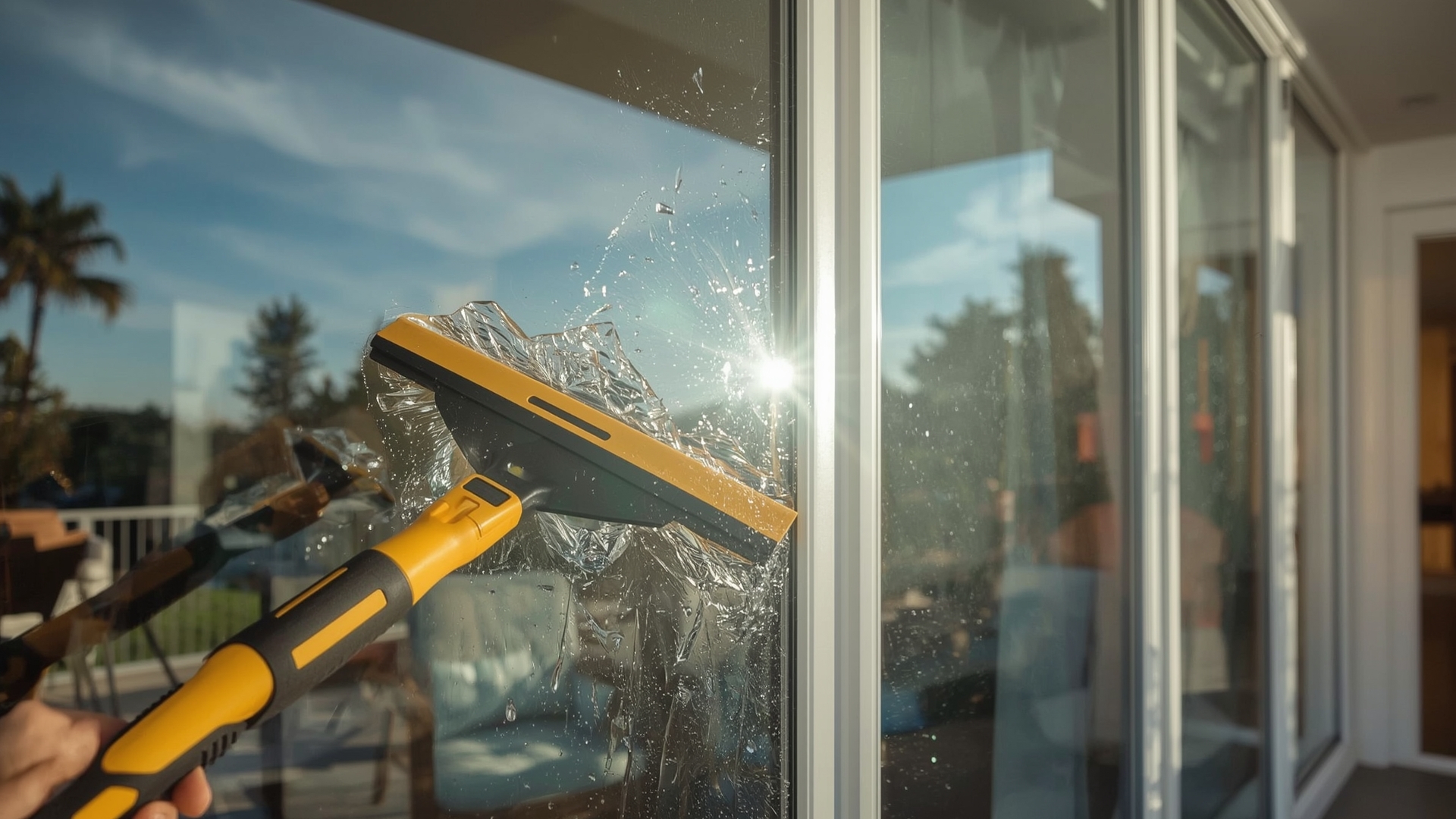
Streaky windows are almost always caused by the wrong technique, the wrong solution, or the wrong timing — not by a lack of effort. Most people scrub harder, use more product, and still end up with smears. The real fix is simpler than you think.
This guide walks you through every step: what to mix, what tools to use, how to move the squeegee, and how to dry the glass so no streaks form. It covers interior windows, exterior windows, and hard-to-reach panes.
Key Takeaways
- Dish soap and water beats most commercial sprays — a few drops in a bucket of warm water is the professional standard.
- A window mop (also called a washer sleeve) applies solution evenly — it’s what professionals use before the squeegee comes out.
- Squeegee stroke pattern matters more than pressure — overlapping horizontal passes eliminate streaks better than random wiping.
- Cloudy days are better than sunny days — direct sunlight dries solution before you can wipe it, leaving residue behind.
- The final wipe uses a dry microfiber cloth — it removes edge water and any missed spots without adding new streaks.
- Vinegar solutions work, but only on clean glass — they struggle with grease and heavy buildup without a pre-wash first.
Why Do Windows Streak After Cleaning?
Quick Answer: Windows streak when cleaning solution dries too fast, leaves a soapy residue, or gets smeared with a dirty cloth. The most common causes are too much soap, a worn squeegee rubber, direct sunlight during cleaning, and using paper towels instead of microfiber.
Streaks form when something is left behind on the glass. That something is usually one of three things: dried soap residue, lint from paper towels, or mineral deposits from tap water.
Too much dish soap is one of the biggest mistakes. More soap doesn’t mean more clean. It means more residue. A few drops in a full bucket is all you need.
Paper towels are another common culprit. They leave tiny fibers on the glass that catch light and look like streaks. Microfiber cloths pull moisture off the surface without leaving anything behind.
Finally, cleaning in direct sunlight dries the solution before you squeegee it off. The water evaporates and leaves the soap or minerals sitting on the glass. That’s the streak you see.
What Causes Stubborn Streaks That Won’t Go Away?
Stubborn streaks are usually mineral deposits or a buildup of old cleaning product. Hard water (tap water with high calcium and magnesium content) leaves white or gray haze after it dries. If you’ve been cleaning with a commercial spray for years, you may have layers of waxy residue built up on the glass.
In these cases, a regular soap-and-water wash won’t cut through. You’ll need a dedicated glass polish or a diluted white vinegar solution as a first pass to break down the buildup.
What Is the Best Cleaning Solution for Streak-Free Windows?
Quick Answer: The best streak-free window cleaning solution is two to three drops of dish soap mixed into one gallon of warm water. This is the standard professional formula. For a no-soap option, mix one part white vinegar with ten parts water.
DIY vs. Commercial Window Cleaning Solutions
| Solution Type | Best For | Mixing Ratio | Streak Risk | Cost Per Use |
|---|---|---|---|---|
| Dish Soap + Water | General cleaning, all window types | 2-3 drops per gallon of warm water | Low (if rinsed well) | Under $0.05 |
| White Vinegar + Water | Mineral deposits, hard water stains | 1 part vinegar : 10 parts water | Low (on clean glass) | Under $0.10 |
| Commercial Glass Cleaner (spray) | Quick touch-ups, interior panes | Ready to use | Medium (ammonia leaves film) | $0.20–$0.50 per window |
| Rubbing Alcohol + Water | Grease, fingerprints, tinted glass | 1 part alcohol : 1 part water | Low | Under $0.15 |
| Distilled Water Only | Final rinse, lightly soiled windows | Undiluted | Very low | $0.05–$0.10 |
Dish soap and water is the go-to for a reason. It cuts through grime, it rinses clean, and it doesn’t leave an ammonia film the way many commercial sprays do. Use warm water — it helps the soap activate and dissolve dirt faster than cold.
If you’re dealing with hard water stains (those chalky white spots), vinegar is your first move. The acetic acid in vinegar dissolves calcium and magnesium deposits. Apply it undiluted to the spots, let it sit for two minutes, then wash the whole window normally.
Should You Use Distilled Water for Cleaning Windows?
Distilled water has had its minerals removed, so it won’t leave deposits when it dries. Professional window cleaners use it for final rinses on large commercial jobs. For home use, it’s helpful if you have very hard tap water. It’s not required if you squeegee and dry the glass completely before any water can dry on its own.
What Tools Do You Need to Clean Windows Without Streaks?

Quick Answer: You need a window mop (washer sleeve), a quality squeegee with a fresh rubber blade, a microfiber cloth for edges and detail work, and a bucket with your cleaning solution. These four tools are what professional window cleaners use on every job.
Window Tool Comparison: Attributes and Values
| Tool | Function | Best Size | Replacement Interval | Price Range |
|---|---|---|---|---|
| Window Mop / Washer Sleeve | Applies solution and agitates dirt | 10–18 inches for residential | Every 3–6 months (daily use) | $8–$25 |
| Squeegee (rubber blade) | Pulls solution and dirt off glass | 10–14 inches for standard windows | Rubber blade every 3 months | $15–$60 |
| Microfiber Cloth (16″x16″) | Wipes edges, handles detail spots | 16″x16″ or larger | Wash after each use, replace yearly | $1–$5 each |
| Bucket (2 gallon) | Holds cleaning solution | 2–3 gallon capacity | N/A | $5–$15 |
| Scraper / Razor Blade | Removes paint, stickers, dried debris | 4-inch blade for flat glass | Replace blade when dull | $5–$20 |
| Extension Pole | Reaches high or exterior windows | 4–16 foot adjustable | N/A (durable) | $20–$60 |
What Is a Window Mop and Why Do Professionals Use It?
A window mop (also called a washer sleeve or scrubber) is a handle with a soft, absorbent fabric sleeve attached. You dip it in your bucket and use it to apply the cleaning solution to the entire pane before you squeegee. It holds far more liquid than a spray bottle and covers the glass evenly in one or two passes.
The fabric agitates dirt and debris off the glass without scratching it. It’s the reason professionals can clean windows in seconds — the mop does the soaking and scrubbing, the squeegee does the pulling.
Most window mop handles are 10 to 18 inches wide. For standard residential windows, a 10- or 12-inch mop is easiest to control. For large patio doors or commercial glass, go wider.
Does Squeegee Blade Quality Matter?
Yes, and it matters more than most people expect. A worn or nicked rubber blade doesn’t pull water cleanly. It leaves thin lines of water behind — those lines dry and become streaks. Replace the rubber blade every three months if you clean windows regularly. If you clean once or twice a year, inspect the blade before each use. Run your finger along the edge — if it feels uneven or you see nicks, replace it.
How Do You Use the Window Mop Technique Correctly?
Quick Answer: Dip the window mop into your bucket until the sleeve is fully saturated. Press it lightly against the glass and make overlapping horizontal strokes from top to bottom. Apply enough solution to keep the entire surface wet while you work. Don’t let it dry before you squeegee.
Step-by-Step Window Mop Application
- Mix your solution — Two to three drops of dish soap in a gallon of warm water. No more.
- Soak the mop sleeve — Submerge the sleeve fully, then press it against the bucket edge to remove dripping excess. You want saturated, not dripping.
- Start at the top corner — Place the mop at the upper left corner of the pane.
- Work in horizontal rows — Move left to right, then drop down and overlap the previous stroke by about two inches.
- Cover every inch of glass — Pay extra attention to corners and edges where dirt collects.
- Work quickly on sunny days — If solution starts drying before you squeegee, you’re working too slowly or in too much direct light.
What Is the Correct Squeegee Stroke Pattern for Streak-Free Windows?

Quick Answer: Use overlapping horizontal strokes, starting at the top and working down. After each stroke, wipe the blade clean with a damp microfiber cloth. Overlap each pass by one to two inches so no wet strip is left behind. This pattern is used by professional window cleaners worldwide.
The Two Main Squeegee Stroke Patterns
There are two stroke patterns professionals use depending on window size and personal preference.
Horizontal stroke pattern (best for beginners): Place the squeegee blade at the top of the wet glass, angled slightly downward. Pull horizontally from one side to the other. Wipe the blade, move down one blade-width (overlapping slightly), and repeat. Finish at the bottom of the pane.
S-curve pattern (best for larger panes): Start at the top corner and pull across. At the other edge, rotate the squeegee and pull back in the opposite direction in one continuous S-shaped motion. This is faster once mastered but takes practice to execute without leaving water at the turning points.
How to Wipe the Blade Between Strokes
Keeping the blade clean is what separates a streak-free finish from a smeared one. After each horizontal stroke, fold a microfiber cloth over the rubber blade and wipe it clean. This removes the dirty water pulled off the glass so you’re not dragging it back across the next stroke. A dirty blade deposits as much as it removes.
What Angle Should You Hold the Squeegee?
Hold the squeegee at roughly a 30-degree angle to the glass. This angle lets the rubber blade make full contact without skipping. Too flat and the blade flexes unevenly. Too steep and it chatter-marks across the surface, leaving fine horizontal lines.
How Do You Dry Windows to Prevent Streaks?
Quick Answer: After squeegeeing, use a dry microfiber cloth to wipe the four edges of the pane where water collects. Then do a final inspection with light angled across the glass. Touch up any remaining spots with a lightly dampened corner of the cloth, then buff dry immediately.
The Edge-Wipe Technique
After the squeegee pass, water pools in the bottom corner and along the frame edges. This is where most post-cleaning streaks come from — people squeegee the center perfectly and ignore the edges.
Take a dry microfiber cloth and run it along all four edges of the pane. Use a single folded edge of the cloth rather than the whole surface. This pulls up the pooled water before it can run back onto the clean glass or dry into a streak line along the frame.
Should You Use a Chamois Cloth or Microfiber?
Both work, but microfiber is easier to use and maintain. A chamois (a natural or synthetic leather cloth used for polishing glass and car finishes) pulls water efficiently and leaves no lint, but it requires rinsing and drying after each use. Microfiber cloths can be washed in a standard washing machine. For home window cleaning, microfiber is the practical choice. Chamois is more common in professional auto detailing and high-end commercial window cleaning.
How Do You Clean Interior Windows Without Streaks?
Quick Answer: For interior windows, use a spray bottle with diluted dish soap or rubbing alcohol solution, a small squeegee, and a microfiber cloth. Work top to bottom. The biggest interior challenge is fingerprints and cooking grease — an alcohol-based solution cuts through these faster than vinegar.
Interior Window Cleaning: Step-by-Step
- Remove dust first — Use a dry microfiber cloth or vacuum brush attachment to wipe the sill, frame, and glass edges. Cleaning wet glass over dry dust creates muddy streaks.
- Spray solution lightly — You don’t need to saturate interior glass the way you do exterior. A light, even coat is enough.
- Squeegee from top to bottom — Even a small 6-inch squeegee works for standard interior panes.
- Wipe the edges — Use a dry corner of your microfiber cloth along the frame.
- Inspect with side lighting — Angle a lamp or flashlight across the glass surface to catch any remaining spots or haze.
How to Handle Interior Grease and Fingerprints
Kitchen windows near the stove collect airborne cooking grease. This grease bonds to the glass and doesn’t respond to light soap-and-water cleaning. A 50/50 mix of rubbing alcohol and water cuts through grease without leaving residue. Apply it, let it sit for 30 seconds, then squeegee or wipe with a microfiber cloth.
Fingerprints on interior glass are mostly skin oils. Dish soap handles these well. For a quick spot-clean between full cleans, a small spray of rubbing alcohol on a microfiber cloth removes fingerprints in one wipe.
How Do You Clean Exterior Windows Without Streaks?

Quick Answer: Exterior windows need a bucket, window mop, and squeegee rather than a spray bottle — the surface area is too large for spray. Pre-rinse with plain water to remove loose dirt and pollen first. Always clean in the shade or on a cloudy day to stop solution drying mid-clean.
Exterior Window Cleaning: EAV Overview
| Attribute | Value / Detail |
|---|---|
| Best time of day | Early morning or late afternoon (avoid direct sun) |
| Best weather condition | Overcast, above 40°F (4°C) |
| Pre-rinse recommended | Yes — garden hose on low pressure |
| Solution method | Bucket and window mop (not spray bottle) |
| Squeegee size for standard windows | 12–14 inches |
| Extension pole needed | For windows above 8 feet from ground |
| Frequency recommended | Every 3–6 months in typical climates |
| Hard water hose pre-rinse workaround | Use a water-fed pole with filtered water |
How to Remove Dirt, Pollen, and Oxidation from Exterior Glass
Exterior windows face weather, pollution, pollen, and hard water from sprinklers. Before applying any cleaning solution, rinse the entire pane with a garden hose. This removes loose particles that would otherwise scratch the glass when you scrub with the mop.
For heavy pollen or oxidation (the dull, yellowish film on older glass), add a tablespoon of white vinegar to your bucket. This gives the solution mild acid that breaks down oxidized particles without damaging the glass.
How Do You Reach High Exterior Windows Safely?
For windows above eight feet from the ground, use a squeegee and window mop attached to an extension pole. Adjustable poles extend from four to sixteen feet, which covers most two-story residential windows from the ground. This eliminates ladder climbing for standard jobs. For third-story windows or large exterior panes, a water-fed pole system (a long pole with a brush head that runs purified water) is the professional method.
What Common Mistakes Make Windows Streak After Cleaning?
Quick Answer: The most common mistakes are using too much soap, cleaning in direct sunlight, using paper towels, skipping the edge wipe, and using a worn squeegee blade. Each of these leaves something behind on the glass that dries into a visible streak or haze.
Mistake-by-Mistake Breakdown
| Mistake | What It Causes | The Fix |
|---|---|---|
| Too much dish soap | Soapy residue film | 2-3 drops per gallon, no more |
| Cleaning in direct sunlight | Solution dries before squeegee | Clean in shade or on cloudy days |
| Using paper towels | Lint fibers stuck to glass | Switch to microfiber cloths |
| Skipping the edge wipe | Pooled water dries at frame edges | Wipe all four edges after squeegeeing |
| Worn squeegee rubber | Thin water lines left on glass | Replace blade every 3 months |
| Dirty mop or cloth | Redeposits old grime onto glass | Wash tools before each cleaning session |
| Skipping pre-dust step | Mud streaks from wet dirt | Dry-wipe dust and debris first |
How Often Should You Clean Windows for Best Results?
Quick Answer: Interior windows benefit from cleaning every one to two months. Exterior windows in most climates need cleaning every three to six months. Windows near the ocean, a busy road, or a dusty environment may need monthly exterior cleaning to prevent buildup that becomes harder to remove over time.
Cleaning Frequency by Window Location
Interior windows accumulate fingerprints, cooking grease, and condensation moisture. The closer the window is to a kitchen or bathroom, the faster it gets dirty. Bathroom windows near showers develop a fine calcium film from steam — wipe these monthly.
Exterior windows depend on your local environment. Near the coast, salt spray deposits on glass weekly. Urban areas with heavy traffic see soot and exhaust buildup within weeks. Suburban homes in low-pollution areas can stretch to six months between exterior cleans without the buildup becoming hard to remove.
Can You Clean Windows With a Pressure Washer?
Quick Answer: You can rinse exterior window frames and sills with a pressure washer set to low pressure (under 1,200 PSI), but direct high-pressure spray on glass risks cracking seals, breaking older panes, and forcing water into the window frame. Use a garden hose for rinsing glass directly.
Pressure washers are useful for cleaning the area around windows — window sills, exterior frames, and the wall around the pane. Keep the nozzle at least 12 inches from the glass and use a fan-tip nozzle rather than a concentrated jet. For the glass itself, a garden hose with a standard spray attachment is safer and sufficient.
Frequently Asked Questions About Cleaning Windows Without Streaks
Does the type of water (tap vs. distilled) affect streaking?
Yes. Hard tap water contains dissolved minerals like calcium and magnesium. When hard water dries on glass, it leaves a white or gray mineral deposit called limescale. Distilled water has these minerals removed, so it dries clean. If your tap water is very hard (above 200 mg/L total dissolved solids), using distilled water for your final rinse noticeably reduces streaking.
Is it safe to clean double-pane windows the same way as single-pane?
Yes, for the exterior and interior surfaces. Double-pane windows (also called insulated glass units, or IGUs) have a sealed air or gas gap between two glass layers. You clean the outer surfaces exactly as you would single-pane glass. If you see fogging or haze between the panes, that’s a failed seal — no cleaning method fixes that. The unit needs to be replaced.
What removes hard water stains from window glass?
Undiluted white vinegar applied directly to the stain and left for two to five minutes dissolves mild hard water deposits. For heavy limescale buildup, a paste of baking soda and white vinegar applied with a non-scratch pad works well. Commercial products like Bar Keepers Friend (which contains oxalic acid) are effective on severe mineral staining that vinegar alone can’t remove.
Can you use a newspaper to dry windows instead of microfiber?
Newspaper was a traditional window-drying method that worked because the ink acted as a mild abrasive and the paper left no lint. Modern newspapers use different inks that can transfer to window frames and your hands. Microfiber cloths outperform newspaper on both streak-free results and ease of use, and they’re reusable.
How do you clean window screens without damaging them?
Remove the screen from the frame, lay it flat on a clean surface, and rinse both sides with a garden hose. Use a soft-bristle brush dipped in mild dish soap solution to scrub the mesh gently. Rinse thoroughly and let air-dry completely before reinstalling. Never use a pressure washer on screens — it distorts or tears the mesh.
Why do my windows look worse after cleaning than before?
This usually means there’s an existing film of old cleaning product, hard water minerals, or paint residue on the glass that your cleaning solution loosened but didn’t fully remove. A glass polish or an oxalic acid cleaner (like Bar Keepers Friend) removes these embedded layers. After stripping the film, a standard soap-and-water clean will finish streak-free.